




What is Proof of Address?
Proof of address is a document used to confirm an individual's residential address. Businesses and organisations request proof of address during customer onboarding, identity verification and regulatory compliance to help prevent fraud, meet Know Your Customer (KYC) and Anti-Money Laundering (AML) requirements, and maintain accurate customer records.
Proof of address is commonly required when opening a bank account, applying for a mortgage, renting a property, registering for financial services or verifying your identity online. Accepted documents typically include utility bills, bank statements, council tax bills and other official correspondence that displays your name and current residential address.
What Counts as Proof of Address?
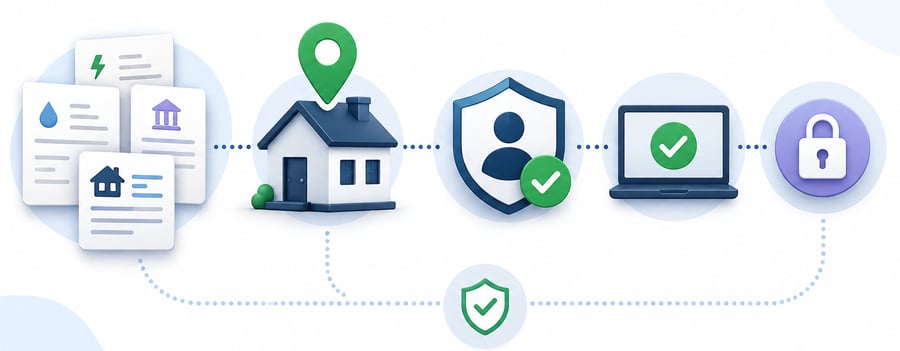
Proof of address refers to an official document that confirms your current residential address. Organisations use proof of address to verify where you live during identity checks, customer onboarding and regulatory compliance. While the exact requirements vary between organisations, proof of address documents must typically display your full name, residential address and be issued within a recent timeframe.
Common documents accepted as proof of address include:
- Utility bills (gas, electricity or water)
- Bank or building society statements
- Council tax bills
- Mortgage statements
- Tenancy agreements
- Government-issued letters
- HMRC correspondence
- Electoral register confirmation
Some organisations may also accept insurance documents or official correspondence from recognised public authorities.
When providing proof of address, ensure the document is clear, legible and matches the information provided during the application process. Many businesses require documents to be dated within the last three months, although this can vary depending on industry regulations and internal policies.
How Can You Get Proof of Address
Proof of address can usually be obtained using an official document that displays your full name and current residential address. Most organisations require the document to be recent, typically issued within the last three months, although requirements may vary.
If you do not have a utility bill, several alternative documents may be accepted as proof of address, including:
- Bank or building society statements
- Council tax bills
- Mortgage statements
- Tenancy agreements
- Government-issued letters
- HMRC correspondence
- Electoral register confirmation
If you're unsure which documents are accepted, check the organisation's verification requirements before submitting your application. Some businesses may also accept digital or online statements, while others require original or certified copies.
Why Do Businesses Require Proof of Address?
Businesses require proof of address to confirm that a customer lives at the address they have provided. Verifying residential addresses helps organisations reduce fraud, comply with regulatory requirements and maintain accurate customer records throughout the customer lifecycle.
Proof of address is commonly requested as part of Know Your Customer (KYC) and Anti-Money Laundering (AML) procedures, particularly in industries such as financial services, banking, insurance, telecommunications and online gaming. By confirming a customer's address, businesses can help detect fraudulent applications, minimise identity theft and ensure compliance with local and international regulations.
Many organisations now combine identity verification (eIDV) with address verification to automate the verification process. By validating both an individual's identity and residential address, businesses can improve customer onboarding, strengthen compliance and deliver a faster, more secure customer experience.
How Businesses Verify Proof of Address
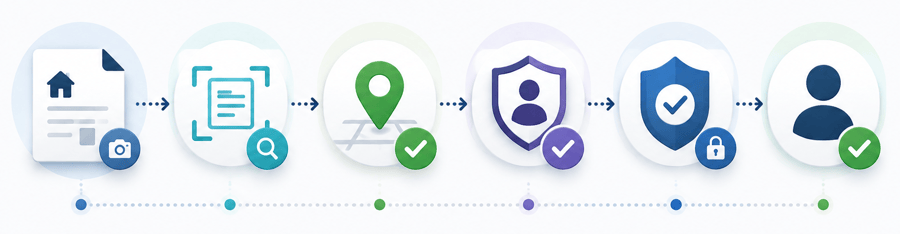
Businesses verify proof of address by reviewing official documents and confirming that the information provided is accurate, genuine and matches the customer's identity. While many organisations still perform manual document checks, automated verification technologies are increasingly used to improve accuracy, reduce fraud and speed up customer onboarding.
Modern proof of address verification typically combines several technologies, including:
Address Verification
Address verification validates, standardises and corrects residential addresses against trusted postal reference data to confirm the address exists and is deliverable.
Identity Verification (eIDV)
Electronic Identity Verification (eIDV) confirms an individual's identity by matching personal information against trusted global data sources, helping businesses meet KYC and AML requirements.
Optical Character Recognition (OCR)
OCR technology extracts names, addresses and other key information from proof of address documents, eliminating manual data entry and improving processing speed.
Automated Document Verification
Document verification analyses proof of address documents for authenticity, detects signs of tampering and confirms that the information matches the customer's submitted details before approval.
Frequently Asked Questions
How old can proof of address be?Most organisations require proof of address documents that have been issued within the last three months, although this can vary depending on the business or industry. Some organisations may accept documents that are up to six months old, while others have stricter requirements for identity verification and regulatory compliance. Always check the organisation's specific guidelines before submitting your documents.
How can I get proof of address without bills?
If you don't have utility bills, there are several alternative documents that may be accepted as proof of address. These commonly include bank statements, council tax bills, tenancy agreements, mortgage statements and official government correspondence. The document should display your full name, current residential address and meet the organisation's date requirements.
Is a driving licence proof of address?
A driving licence may be accepted as proof of address if it displays your current residential address. However, not all organisations accept a driving licence on its own, and some may request an additional document such as a utility bill or bank statement to confirm your address.Is a tenancy agreement proof of address?
Yes, a tenancy agreement is commonly accepted as proof of address by many organisations. To be accepted, the agreement should clearly show your name, residential address, tenancy dates and, where applicable, the landlord or letting agent's details. Some organisations may also request a more recent document alongside the tenancy agreement.
Need Help Verifying Customer Addresses?
As the leader in address verification, Melissa combines decades of experience with unmatched technology and global support to offer solutions that quickly and accurately verify addresses in real-time, at the point of entry. Melissa is a single-source vendor for address management, data hygiene and pre-sorting solutions, empowering businesses all over the world to effectively manage their contact data quality.