
Melissa Data Quality Platforms
Melissa's Full Spectrum DQ Approach. Learn More
ETL/MDM PlatformsMelissa offers a host of solutions for full spectrum data quality to ensure the success of your data.




Melissa Data Quality Tools
Verify, correct & cleanse contact data in 240+ countries.Melissa Identity Verification
Increase compliance, reduce fraud and improve onboarding. Visit Identity Verification SolutionsMelissa E-Commerce / CRM
Improve customer onboarding, marketing & fulfillment.Melissa Enrich
Gain insight into who and where your customers are.Melissa Industries
See how Melissa's solutions work across industries.Data Hygiene
Keep your mailing list up-to-date, qualify for postal discounts & reduce UAA mail.Data Enhancement
Enrich your consumer or business records for greater insight & omni-channel marketing success.SaaS
Clean and update your data in the cloud, no software to maintain.Verify & enrich your records with multi-sourced, authoritative reference datasets.





How Our Data Deduplication Tool Works
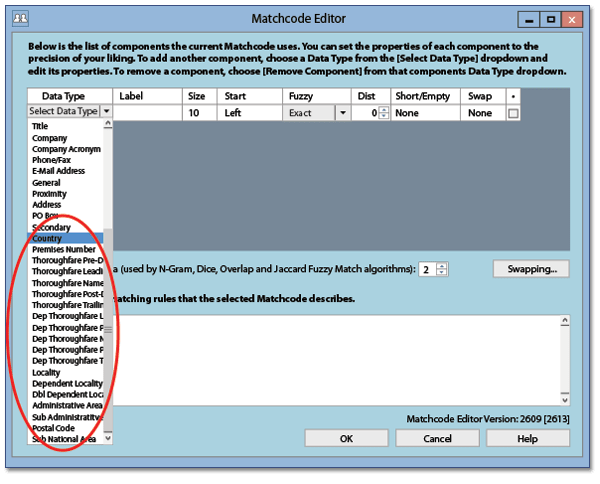
MatchUp employs a matchcode to determine if two records should be considered duplicates. MatchUp uses a predefined matchcode, or one that you have created using the Matchcode Editor.
Fuzzy Matching
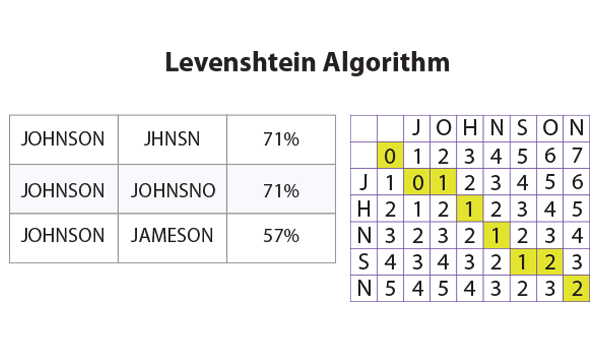
MatchUp combines Melissa’s deep domain knowledge of contact data with over 20 fuzzy matching algorithms to match similar records and quickly dedupe your database.
Global Merge / Purge & Deduping
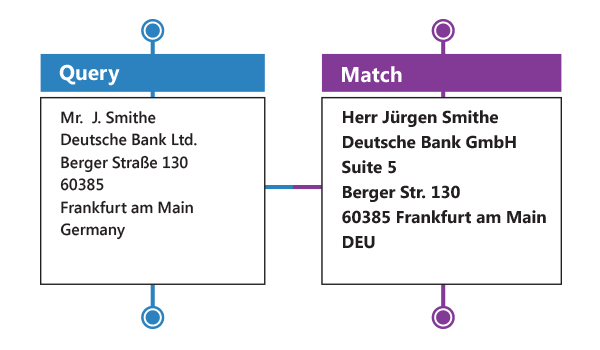
The World Edition of MatchUp supports 12 countries, including Canada, Germany, U.K., and Australia. MatchUp’s advanced deduping can see through diacritic equivalents to Latin characters and interpret keywords that are the same but spelled differently (i.e. Germany and DEU).
Unique Matching Scenarios
MatchUp has some unique attributes which can be employed to help identify duplicates in some interesting ways.
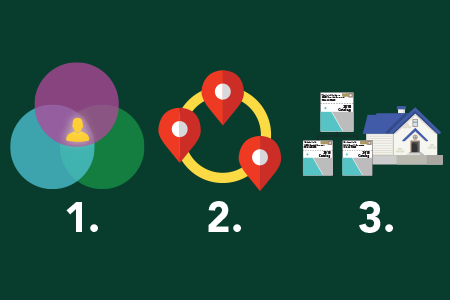
1. Survivorship for Golden Record Creation
Automatically create a trusted Golden Record by selecting the best information from multiple duplicate records. MatchUp consolidates customer data into a single, accurate profile, helping improve data quality, reporting and customer insights.
2. Proximity Matching
Identify duplicate records based on geographic proximity, even when addresses aren't an exact match. MatchUp uses patented proximity matching to recognise records that are physically close together, improving matching accuracy across complex address data.
3. Householding
Group and consolidate records that belong to the same household or corporate family. Householding provides a more complete view of customer relationships while reducing duplicate communications, marketing costs and unnecessary mailings.
Three Ways to Dedupe Your Data
MatchUp offers three methods of operation (or ways to match records):
1. Read / Write Deduping
Compare records across one or more databases in a single batch process. MatchUp identifies duplicate records and retains a single master record, making it ideal for cleansing and deduplicating entire databases.
2. Incremental Deduping
Identify duplicate records in real time as new data enters your database. Ideal for web forms, CRM systems and call centres, ensuring duplicate records are prevented before they're created.
3. Hybrid Deduping
Combine batch and real-time data deduplication for maximum flexibility. Hybrid deduping compares incoming records against a targeted set of potential matches, making it ideal for ongoing data quality management.