




What is a Postal Code?
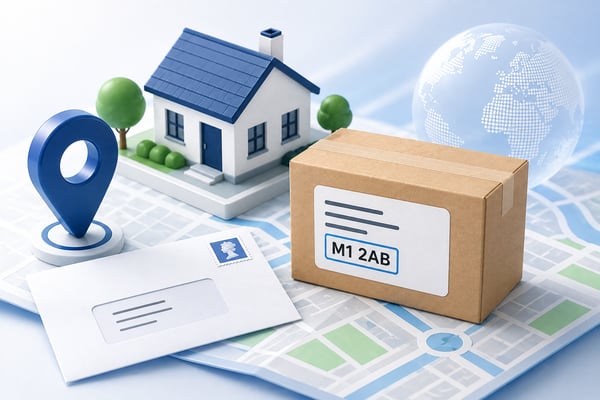
A postal code is a series of letters, numbers, or a combination of both used by postal services to identify specific geographic areas for mail and parcel delivery. Postal codes help sort and route mail efficiently, ensuring letters and packages reach the correct destination quickly and accurately.
While many people use the terms postal code, postcode, and ZIP code interchangeably, the terminology varies by country. For example, the United Kingdom uses postcodes, the United States uses ZIP codes, and many other countries simply refer to them as postal codes.
In this guide, we'll explain what a postal code is, how postal codes work, why they're important, and how different countries use them.
Why Are Postal Codes Important?
Postal codes play a vital role in helping postal services, courier companies and businesses process and deliver mail accurately. By dividing countries into smaller geographic areas, postal codes make it easier to sort mail, optimise delivery routes and reduce the risk of items being sent to the wrong address.
Without postal codes, postal workers would need to rely solely on street names and local knowledge, making the delivery process slower and more prone to errors.
Some of the key benefits of postal codes include:
- Faster mail and parcel delivery – Postal codes help automate sorting, allowing mail to reach the correct destination more efficiently.
- Improved delivery accuracy – They reduce the likelihood of parcels being delayed or delivered to the wrong address.
- Better navigation and logistics – Delivery companies use postal codes to optimise routes and improve operational efficiency.
- Support for emergency and public services – Postal codes help emergency responders, utility providers and government organisations identify locations more quickly.
- International consistency – Although postal code formats vary by country, they provide a standard way to identify geographic areas for global mail and parcel delivery.
Today, postal codes are used far beyond traditional mail services. They support eCommerce, logistics, mapping applications, customer databases and many other systems that rely on accurate location information.
How Do Postal Codes Work?
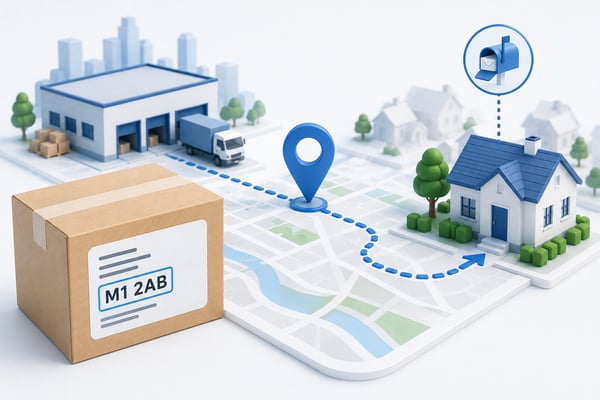
Postal codes divide countries into smaller geographic areas, making it easier for postal services to sort, route and deliver mail efficiently. Rather than relying only on a street address, postal codes provide an additional location identifier that helps direct mail to the correct delivery region.
The structure of a postal code varies between countries. Some use numbers only, while others combine letters and numbers to identify specific regions, cities or neighbourhoods.
For example:
- United Kingdom – Postcodes use a combination of letters and numbers (e.g. SW1A 1AA) to identify a very specific geographic area.
- United States – ZIP Codes consist of five digits (e.g. 90210), with an optional four-digit extension for even greater precision.
- Canada – Postal codes alternate between letters and numbers (e.g. M5V 3L9) to identify small delivery areas.
- Australia – Postcodes use four-digit numbers (e.g. 2000) to represent suburbs and regions.
Although formats differ from country to country, the purpose remains the same: to help ensure mail and parcels are delivered quickly and accurately to the correct destination.
What is the Difference Between a Postal Code and a ZIP Code?
Although the terms postal code and ZIP code are often used interchangeably, they are not exactly the same. A postal code is the general term used worldwide to describe a code that helps identify a geographic area for mail delivery, while a ZIP code is the name used specifically in the United States.
In other words, every ZIP code is a postal code, but not every postal code is a ZIP code.
Here's a quick comparison:
|
Postal Code |
ZIP Code |
|
Used in many countries worldwide |
Used only in the United States |
|
May contain letters, numbers or both |
Contains numbers only |
|
Formats vary by country |
Standard five-digit code, with an optional ZIP+4 extension |
|
General term for location-based mail codes |
A specific type of postal code developed by the United States Postal Service (USPS) |
If you'd like to learn more about ZIP Codes, including how they work and where they're used, read our guide on What Is a ZIP Code?
How Can You Find a Postal Code?
If you don't know a postal code, there are several ways to find it. Most countries provide official postcode or postal code lookup services, allowing you to search using a full or partial address.
Common ways to find a postal code include:
- Using your national postal service – Many postal authorities offer online postcode lookup tools.
- Checking online maps – Some mapping services display postal codes for addresses and locations.
- Looking at previous mail – Letters, bills and official documents often include the correct postal code.
- Asking the sender or recipient – If you're unsure, confirming the postal code before sending mail can help avoid delivery issues.
Using the correct postal code is important for ensuring mail and parcels reach the intended destination without unnecessary delays. Even a small mistake can result in misrouted deliveries or additional processing time.
Why Are Accurate Postal Codes Important for Businesses?
For businesses that rely on customer address data, using accurate postal codes is essential for efficient operations. Incorrect or missing postal codes can lead to failed deliveries, increased shipping costs and poor customer experiences.
Accurate postal codes help businesses:
- Improve mail and parcel delivery accuracy.
- Reduce returned shipments and delivery delays.
- Support logistics and route planning.
- Improve customer data quality.
- Enhance reporting and geographic analysis.
As organisations collect customer addresses online, ensuring postal codes are accurate becomes increasingly important. Valid postal code data helps businesses maintain clean address records and supports more reliable downstream processes, from shipping and fulfilment to customer communications.
If your organisation needs to validate or verify postal codes as part of the address capture process, you can learn more about our Postcode Lookup and Address Verification solutions.
Frequently Asked Questions
How are postal codes different in each country?
Postal code formats vary around the world. Some countries, such as the United States, use numbers only, while others, including the United Kingdom and Canada, use a combination of letters and numbers. Although the format differs, the purpose remains the same: helping mail and parcels reach the correct destination.
Can two addresses have the same postal code?
Yes. A single postal code often covers multiple addresses, streets or even entire neighbourhoods. Postal codes identify a geographic delivery area rather than an individual property, which is why multiple addresses can share the same code.
How do I find my postal code?
You can usually find your postal code using your country's official postal service website, online maps, or by checking previous mail, bills or official documents that display your address.
Can a postal code change?
Yes. Postal codes can change when new housing developments are built, delivery routes are updated or postal authorities reorganise geographic areas. While changes are relatively uncommon, it's important to use the most up-to-date postal code when sending mail.
Melissa – The Address Experts
As the leader in address verification, Melissa combines decades of experience with unmatched technology and global support to offer solutions that quickly and accurately verify addresses in real-time, at the point of entry. Melissa is a single-source vendor for address management, data hygiene and pre-sorting solutions, empowering businesses all over the world to effectively manage their data quality.