







This guide provides a comprehensive overview of Malaysia address formatting, postal code structures, and localization practices. It includes information on postal services, languages, time zones, and address validation standards across Malaysia.
Address Format
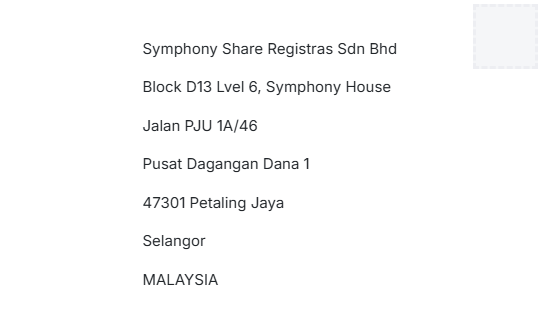
Structure for standardized Malaysia postal addresses:
- Organization
- SubBuilding SubPremisesLevel SubPremises Building
- PremisesNumber Thoroughfare
- DependentLocality
- PostalCode Locality
- AdministrativeArea
- Country
Address Verification Data
Malaysia postal addresses verification data
| Available | Yes |
| Does the country use postal codes? | Yes |
| PO Box Indicator | Peti surat, PO Box, Beg Berkunci, Poste restante, WDT |
| ISO-2-Code | MY |
| ISO-3-Code | MYS |
| Phonecode | 60 |
Address Example
Example of standardized Malaysia postal addresses
Country Info
Full Country Name: Malaysia
| Country Alpha-2 code | MY |
|---|---|
| Country Alpha-3 code | MYS |
| Numeric Code | 458 |
Time Zone
Malaysia Time Zone Details
| Time Zone | UTC | DST |
|---|---|---|
| Malaysia Time | UTC+8 | N/A |
Daylight saving time is not observed.
Official Language
Fun Facts
- The total area of Malaysia is about 330,803 sq km / 127,724 sq miles, split between Peninsular Malaysia and East Malaysia on Borneo. (CIA World Factbook)
- Malaysia has a coastline of approximately 4,675 km / 2,905 miles, bordering the South China Sea and the Strait of Malacca. (CIA World Factbook)
- The terrain is mostly coastal plains with mountains and tropical rainforests, especially in Borneo. (CIA World Factbook)
Postal Authority
Pos Malaysia Berhad is the national postal service of Malaysia. It provides comprehensive mail and parcel delivery services, courier services, and logistics throughout Peninsular Malaysia, Sabah, and Sarawak.
Reference: https://www.pos.com.my
Postal Code Format
In Malaysia, postal codes consist of 5 digits formatted as NNNNN. The first two digits represent the state, and the next three digits represent the specific delivery area. The code appears after the city/town and before the state name.
Example: Jalan Raja Chulan, 50200 Kuala Lumpur, Wilayah Persekutuan
Name Conventions
Population Names
In Malaysia, naming conventions vary significantly by ethnicity (Malay, Chinese, Indian, and indigenous groups). The multi-ethnic population follows different naming traditions:
- Malay: [given name] [bin/binti] [father's name]
- Chinese: [FAMILY NAME] [given name]
- Indian: [given name] [a/l or a/p] [father's name] or [given name] [FAMILY NAME]
Examples:
- Ahmad bin Abdullah (Malay)
- Siti Nurhaliza binti Tarudin (Malay)
- Tan Wei Ling (Chinese)
- Rajendran a/l Muthusamy (Indian)
- Priya a/p Kumar (Indian)
- Encik Ahmad bin Abdullah dan Puan Siti Nurhaliza binti Tarudin (Malay)
Malay names typically do not distinguish a surname, but rather are a part of a full name not broken down on official documents.
Malaysian Malay names use "bin" (son of) or "binti" (daughter of) between the given name and father's given name. The father's name is not a hereditary surname, therefore differs from generation to generation in the same family.
Malaysian Chinese typically follow Chinese naming conventions with family name first (Eastern order), but may adopt Western name order in English contexts.
Malaysian Indians may use patronymic systems with "a/l" (anak lelaki, son of) or "a/p" (anak perempuan, daughter of), or may use family surnames depending on their specific ethnic background.
Common titles include Encik/En. (Mr.), Puan/Pn. (Mrs.), Cik (Miss) for Malays; Mr., Mrs., Ms. for others; and traditional titles like Datuk, Tan Sri for those with honors.
Malaysian naming law accommodates the diverse ethnic naming practices of the multi-ethnic population.
Upon marriage, Malay women typically retain their own names, as they do not have hereditary surnames to change.
Indigenous groups in Sabah and Sarawak have their own distinct naming traditions.
Organizational Names
Malaysian businesses must register with the Companies Commission of Malaysia (SSM). Common legal entity designations include:
- Bhd. (Berhad) - Public limited company
- Sdn. Bhd. (Sendirian Berhad) - Private limited company
- LLP (Perkongsian Liabiliti Terhad) - Limited liability partnership
- PLT (Perkongsian Liabiliti Terhad) - Limited liability partnership
- Enterprise - Sole proprietorship or partnership
Company names may be in Malay, English, or other languages, but must include a Malay or English legal designation. Names must be unique and not offensive. The legal designation typically appears at the end of the company name.